
Kimi K3.1 Pro is Moonshot AI's new model for coding, 3D creation, and long, multi-step work. Its standard API price is $2 per million input tokens and $10 per million output tokens. That matches Claude Sonnet 5.5 and GPT-6.1 Sol, costs half as much as Claude Opus 5.5, and is one fifth the price of GPT-6 Astra at standard rates. I checked the prices and launch claims on October 24, 2026. (Kimi API pricing, Anthropic pricing, OpenAI model pricing)
My short take: Kimi K3.1 Pro is worth testing if you build software, work with 3D tools, or process large documents. I would not switch based on a leaderboard position or a low token price alone. I have not run my own head-to-head test, so this is a source-based launch review. I separate Moonshot's product claims from independent test results below.
What Kimi K3.1 Pro is
Moonshot AI introduced Kimi K3.1 Pro on October 23, 2026. The company describes it as a post-trained version of Kimi K3, with a one-million-token context window. In plain English, that is a large amount of text and other input the model can consider in one request. A large context does not guarantee that it will remember every detail or get every answer right.
Moonshot also announced Kimi K3.1 Pro Highspeed, which it says generates responses two to three times faster. The models are available through the Kimi website, Kimi Code, and the Kimi API. The full model weights are planned for November 4. As of the date of this review, they have not been released, so I would not yet plan a self-hosted setup around them. (Moonshot's launch announcement)
Artificial Analysis lists the model at 2.8 trillion total parameters, with 104 billion active per token. That scale is a signal that running the full model will require substantial hardware. The open-weight release could give developers more control, but the published files and license will determine what they can actually run and change. (Artificial Analysis evaluation)
What can Kimi K3.1 Pro make?
Moonshot says Kimi K3.1 Pro can build full front-end pages, interactive websites, and game experiences with tools such as Unity, Unreal Engine, and Godot. It can also write scripts for Blender and CAD tools to create or change 3D assets. These are useful areas to test, but they do not mean every prompt will produce a finished product. Code, security, design, and errors still need a human review.
The three images below were supplied as visual references. They illustrate website building, Blender-based 3D work, and research with spreadsheets, but they are not verified Kimi K3.1 Pro results. Moonshot's official launch page contains the company's own examples.
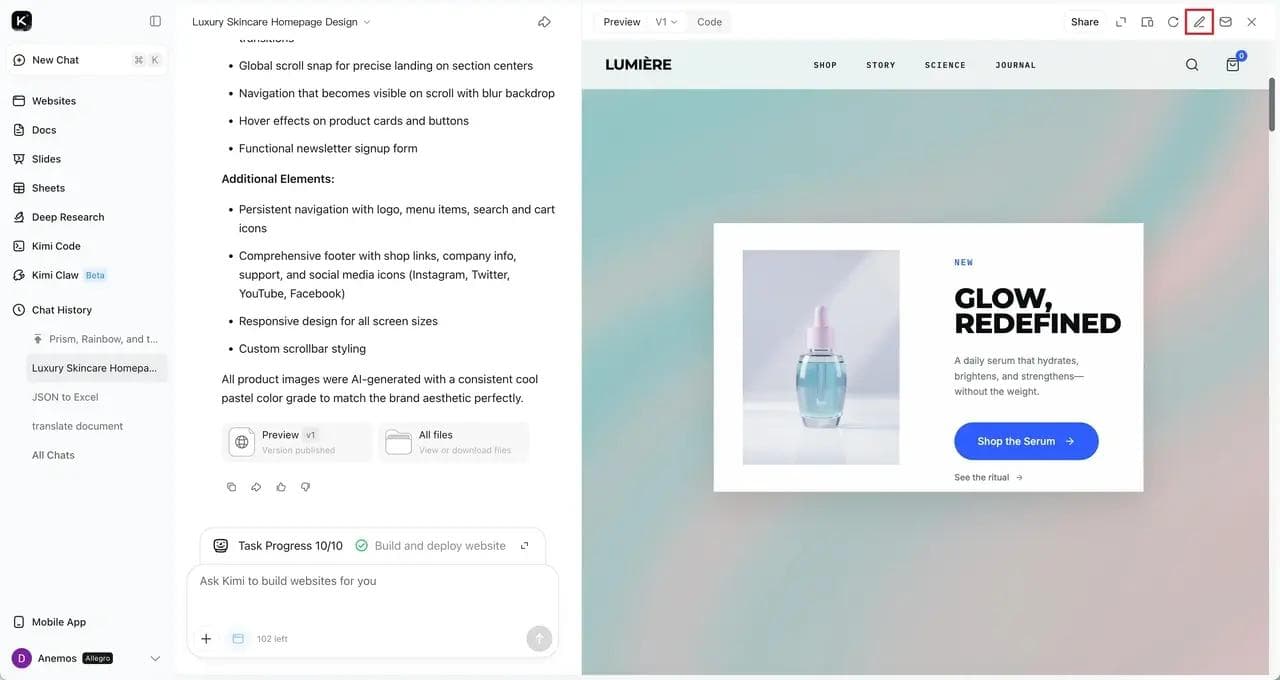
An illustrative website-building reference, not a verified Kimi K3.1 Pro test.
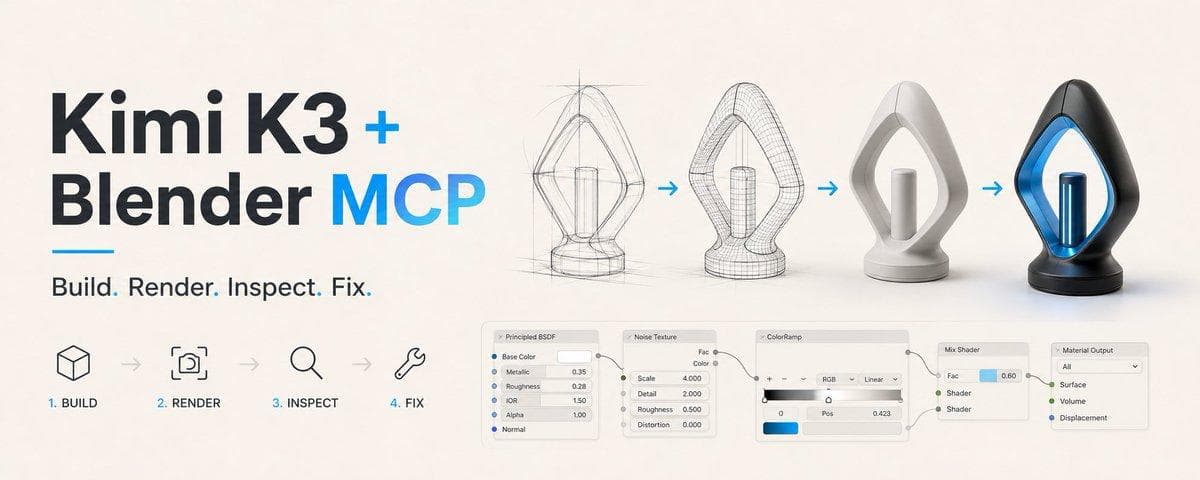
This reference describes a Kimi K3 and Blender workflow. It is not a K3.1 Pro result.
Moonshot also has a 3D Make tool for previewing, editing, and exporting 3D models. For research and finance work, the company describes workflows that bring together documents, spreadsheets, calculations, and several steps of analysis. I find those examples promising, but many of the finance scores come from Moonshot's own tests. I would check the sources, formulas, and final files before relying on the result.
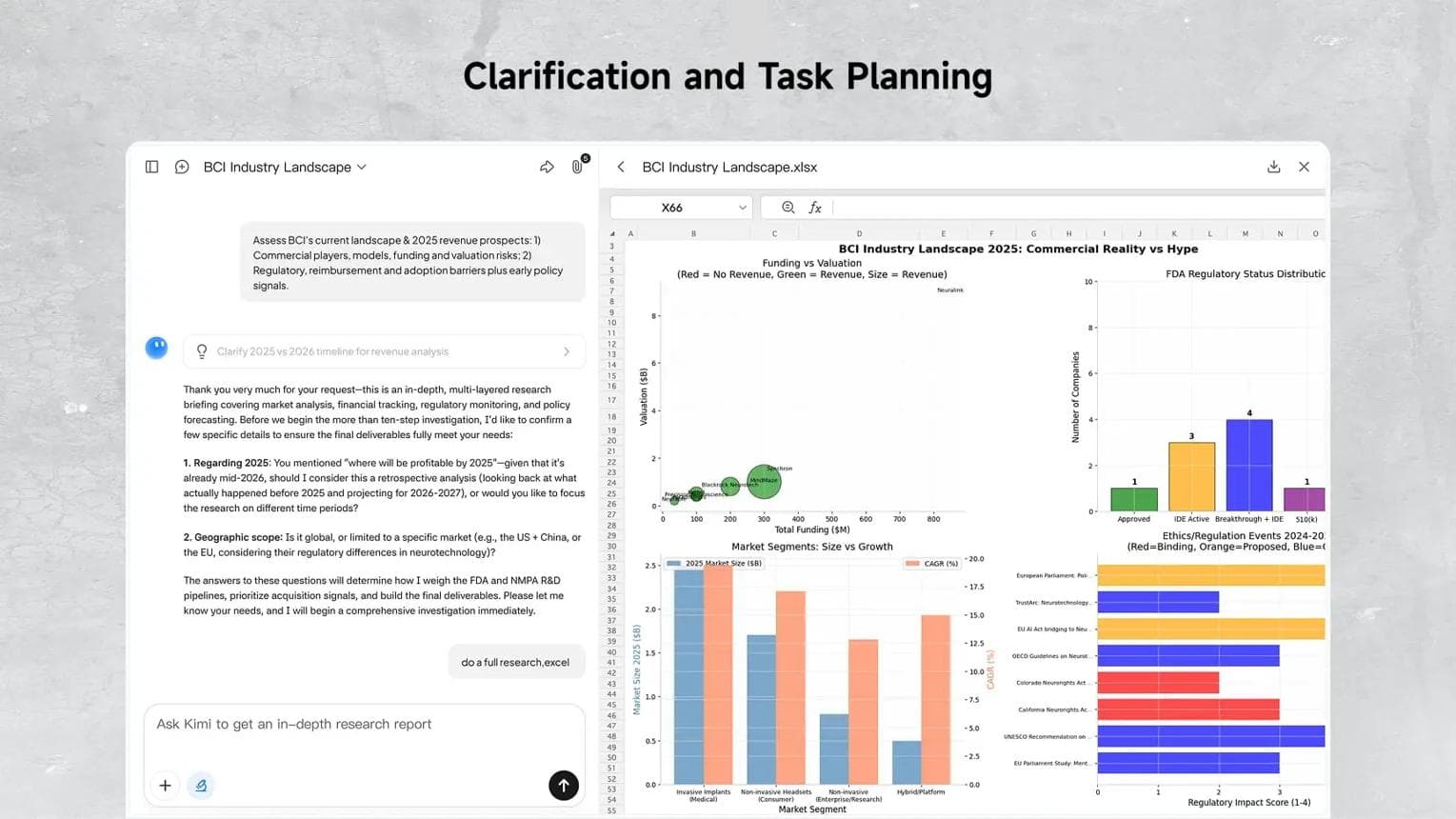
An illustrative research and spreadsheet workflow, not an independent Kimi K3.1 Pro evaluation.
If the website examples make you want to try an AI-built page yourself, I explain a practical design and coding workflow in my guide to building a more considered 3D website.
Kimi K3.1 Pro API pricing compared with Claude and GPT
API prices are separate from monthly subscriptions. The first two prices are for every one million input or output tokens. In the last column, I add one million input tokens and one million output tokens to show a simple example. A real chat uses a different number of tokens, so this is not a typical bill estimate.
| Model | Input per 1M tokens | Output per 1M tokens | Example: 1M input + 1M output |
|---|---|---|---|
| Kimi K3.1 Pro | $2 | $10 | $12 |
| Claude Opus 5.5 | $4 | $20 | $24 |
| Claude Sonnet 5.5 | $2 | $10 | $12 |
| GPT-6 Astra | $10 | $50 | $60 |
| GPT-6.1 Sol | $2 | $10 | $12 |
On these standard rates, Kimi is half the price of Opus 5.5 and one fifth the price of GPT-6 Astra for the same number of input and output tokens. But it does not undercut every strong model. Claude Sonnet 5.5 and GPT-6.1 Sol have the same listed rates. The Kimi API, Anthropic API, and OpenAI model pages list current rates and billing details. Prices can change, and this example leaves out cached tokens, tools, taxes, and account-specific discounts.
What the benchmark results tell me
Artificial Analysis gave Kimi K3.1 Pro a score of 55 on its Intelligence Index, placing it fourth among the models it evaluated at launch. It also measured 67% on Terminal-Bench 4.0, a set of coding tasks that models complete through a computer terminal, and 73% on AutomationBench-AA, a test of multi-step software workflows.
Moonshot reports 65.7% for Kimi on its Terminal-Bench run, with Claude Opus 5.5 at 66.4% in the company's comparison. Those figures are close, but they come from different evaluation setups. I would not describe Kimi as beating Opus across coding tests. The more useful takeaway is that an independent evaluation found a strong result, while the company's own run puts it near a leading Claude model. Neither result can tell you which model will work best with your codebase or tools. (Artificial Analysis results, Moonshot's results)
Moonshot's wider chart shows Kimi in front on some tests, including SWE Marathon, Agents' Last Exam, and OfficeQA Pro v2. Other models lead on tests such as Terminal-Bench Science, Kimi Code Bench 3.0 Long-horizon, and BenchCAD. That spread is more useful than a single rank: Kimi looks competitive across several kinds of work, but it is not first at everything.
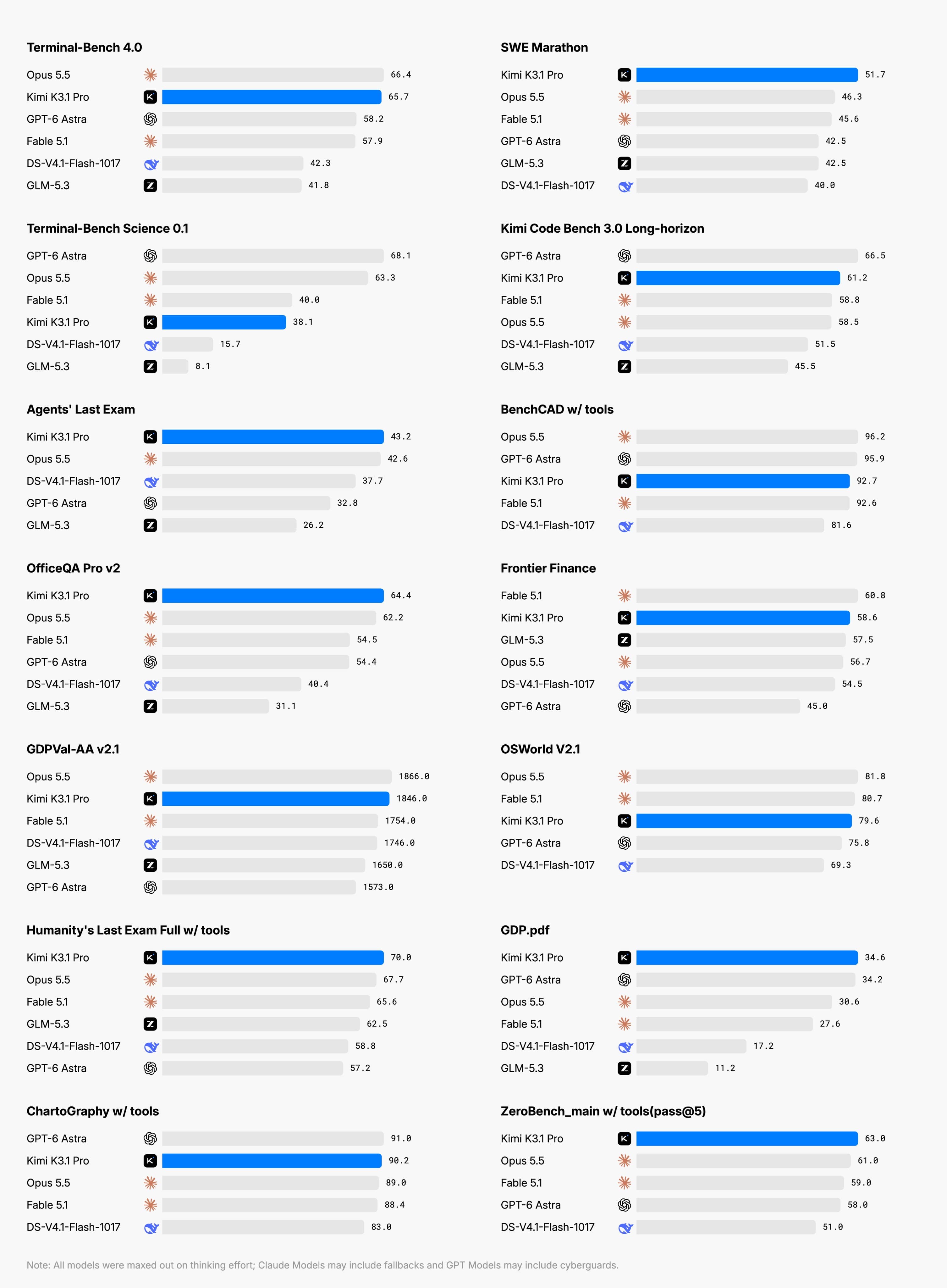
Moonshot's launch comparison. Its notes say all models used maximum thinking effort, and that some Claude results may include fallbacks while GPT results may include extra safety checks.
Read the launch article and evaluation notes.
The cost catch: token prices do not show the whole bill
Artificial Analysis found that Kimi K3.1 Pro used about 55,000 output tokens per Intelligence Index task, around 14% more than Kimi K3. The evaluator estimated a cost of about $1.98 per task, close to the earlier model, even though K3.1 Pro's token rates were lower.
That is the detail I would watch in a real coding project. A model can charge less for each token but use more tokens to finish the job. The total can also include tool calls, repeated attempts, and the time I spend checking the work. I would compare the cost of a finished task, not just the price shown on a model page.
Is Kimi K3.1 Pro worth trying?
I would test it if I needed an AI model for long coding tasks, 3D scripts, or research across large files. I would also keep an eye on the promised open-weight release if I needed to run a model under my own control. The size means that local hosting may not be practical for an individual developer.
For a fair comparison, I would pick three to five tasks I already do, then give the same inputs and tools to Kimi and my current model. I would record whether the result works, how much editing it needs, how long the task takes, and the total API bill. That small test tells me more than a single benchmark rank.
You can start with the Kimi website, explore the Kimi Code model guide, or build with the Kimi API quickstart. The API is billed by usage, while Kimi Code and the website have their own access plans and limits, so check the current terms for the option you plan to use.
For a separate comparison of AI tools as products, I also looked at four AI agent products and their access options.
Kimi K3.1 Pro looks like a serious new model, especially for developers who want to test long, tool-based work. I would put it on the shortlist, then let the quality of my own results and the full task cost decide whether I keep using it.